
Internationalization
The deeper layers of making a product work in different markets.

More and more companies have been exploring opportunities in markets outside their home country. To do that, they need to internationalize their digital products.
The first thing we usually think about when internationalization becomes necessary is language. Portuguese already uses accents, which makes it easier for us to write in other languages that also use accent marks. But when we think about other character sets, like Japanese or Arabic, we need to make adjustments in our interface architecture. Different languages directly affect the length of messages and prompts, which impacts the design. Something that takes two four-letter words in English may require four seven-letter words in German. Beyond the visual aspect, it’s also crucial for a local person to review the content. Automatic translations or translations done by non-native speakers may fail to capture cultural nuances or even the most commonly used words.
I remember a situation at Gympass when, in Brazil, we relied on the review of an American who had been living here for years to translate a feature we were about to launch. After the review, we shipped the feature. Shortly after, we received feedback from an American employee based in our New York office: “The translation is good, grammatically correct, but we just don’t talk like that anymore.”
Language is alive and constantly evolving. A native speaker who hasn’t lived in the country for several years may not keep up with this evolution.
The second aspect to consider when internationalizing is billing and payment: how customers will be charged and how they will pay. This can introduce significant implementation complexity. My recommendation is to use global billing and payment providers such as Adyen, Stripe, or PayPal.
Beyond language, interface, billing, and payment, there are other aspects to analyze when planning internationalization, such as the product’s domain. For B2B or B2C products tied to a specific domain, there may be local considerations. Think of ERPs, restaurant systems, or doctor–patient relationship platforms.
At Gympass, Brazil was initially the largest market, so the focus was to build for Brazil and adapt to other countries. For billing and payment, we chose Adyen as our global provider. In late 2018, we had to start worrying about GDPR because, while it wasn’t a major topic in Brazil or the U.S., it was already a strong requirement in Europe. We had to shift part of the team’s focus. In late 2019, we realized we needed to shift again. The U.S. had become the main market we wanted to conquer. So we changed the product development team’s focus to build first for the U.S. and then adapt to other countries.
Today, my recommendation is to have a small senior local team capable of understanding and meeting local needs. This team should include one or two people from headquarters to ensure alignment with the business and fluid interaction with the main office. At Gympass, we built a team in New York focused on the U.S. market and another in Lisbon focused on the European market.
One last important aspect to consider: Internationalization is not a product-only game; it is a company-wide game. In the previous paragraphs, I’m discussing what to consider when planning to make your product work across different countries. But building your product to work in another country is only one piece of the puzzle — a very important one, but still just a piece. Beyond making the product functional in a new market, the company also needs to think about the go-to-market strategy for each country and how it will operate the product locally. At Gympass, every new country launch required relocating a senior leader to set up the local operation, hire a team, partner with local gyms, and sell the product to companies. And once we brought partners and clients on board, this team was responsible for running all local operations.
Digital transformation and product culture
This article is another excerpt from my newest book “Digital transformation and product culture: How to put technology at the center of your company’s strategy“, which I will also make available here on the blog. So far, I have already published here:
Part 1: Concepts
Chapter 1: The so-called digital transformation – Project and Product
Chapter 2: Uncertainty and digital transformation
Chapter 3: Types of company
Chapter 4: Type of company vs digital maturity
Chapter 5: Business models
Chapter 6: Agile, digital and product culture
Part 2: Principles
Chapter 7: Deliver early and often – Measuring and managing the productivity – Case study: Dasa Group – Case study: Itaú Unibanco
Chapter 8: Focus on the problem – The Famous Product Discovery – Why the “business demands => IT implements” model does not work – Case study: Magazine Luiza
Chapter 9: Result delivery – Outsource or internal team? – Case study: Centauro
Chapter 10: Ecosystem mindset
Part 3: Tools
Chapter 11: Product Vision – Product vision examples
Chapter 12: Product Strategy
Chapter 13: Team Structure – Structuring effective product development teams – Structural teams – Team structure spreadsheet – Downsizing and layoffs – CTO + CPO – Internationalization
Workshops, coaching, and advisory services
I’ve been helping companies and their leaders (CPOs, heads of product, CTOs, CEOs, tech founders, and heads of digital transformation) bridge the gap between business and technology through workshops, coaching, and advisory services on product management and digital transformation.
Gyaco Podcasts
At Gyaco, we believe in the power of conversations to spark reflection and learning. That’s why we have three podcasts that explore the world of product management from different angles:
Produto em Pauta: In the new season, titled “Beyond the Buzzwords”, Felipe Castro and I demystify product terms with real examples from our clients. Available on YouTube and Spotify. Recorded in Portuguese, with English subtitles on YouTube.
Product Chronicles, the Brazilian Way: with Fábio Martinelli Duarte and Paulo Caroli — the Brazilian way of building products: stories, challenges, and lessons learned, featuring case studies from our clients. Available on YouTube and Spotify. Recorded in English, with Portuguese subtitles on YouTube.
Beyond the Article, Expanded by AI: C.L.A.R.A. (Creative Language AI for Reflective Augmentation) chats with my AI clone, JocAI, expanding on my articles with new perspectives. Available on YouTube and Spotify. Thanks to AI, episodes are available in English, Spanish, and Portuguese.
Digital Product Management Books
Do you work with digital products? Do you want to know more about managing a digital product to increase its chances of success, solve its user’s problems, and achieve the company objectives? Check out my Digital Product Management books, where I share what I learned during my 30+ years of experience in creating and managing digital products:
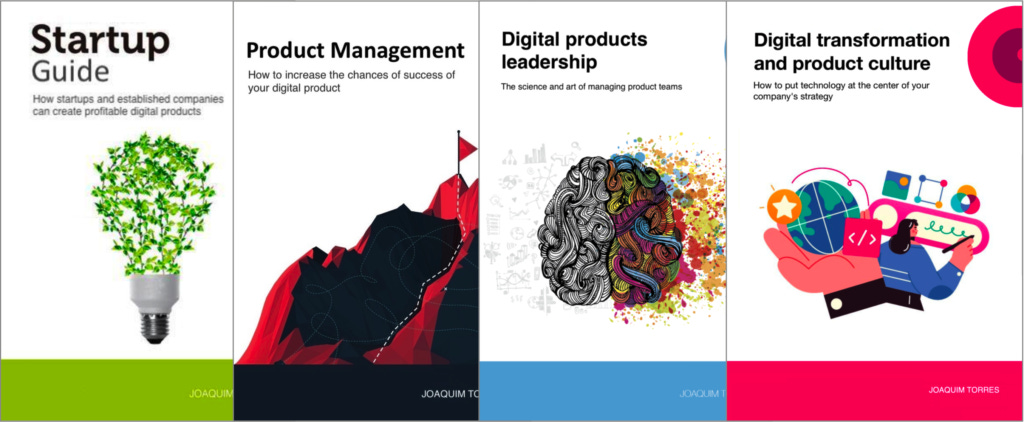
Digital transformation and product culture: How to put technology at the center of your company’s strategy
Leading Product Development: The art and science of managing product teams
Product Management: How to increase the chances of success of your digital product
Startup Guide: How startups and established companies can create profitable digital products
Fantastic breakdown of what internationalization actually requires beyond just translating strings.
Your Gympass anecdote about the long-term American expat captures something most product teams miss. Language isn't just a translation puzzle, it's a living cultural negotiation. You can have perfect grammar and still sound like a bot becasue idioms, slang, and phrasing shift constantly. That's why native-in-market reviewers are non-negotiable, even if they add friction to your release cycle.
What stands out most is how you framed internationalization as a company-wide game, not a product-only challenge. Most teams I've worked with treat it like an engineering checklist: swap out the API for Stripe, hire a translator, ship it. Then they're confused when adoption stalls. But if you don't have a local go-to-market team that understands regulatory nuances, partner ecosystems, and customer behavior, you're essentially dropping a product into a market blind. The technical product work is table stakes. The real work is everything after launch.