Tuckman Model
Why team performance takes time and why constant reorgs make it worse

This article is an excerpt from the book “Digital Transformation and Product Culture: How to Put Technology at the Center of Your Company’s Strategy”.
Bruce Tuckman, an American researcher on group dynamics, proposed in 1965 four stages that a group of people who start working together goes through, and how these stages impact the group's effectiveness.

The four stages of Tuckman for team formation are:
Forming: In this stage, group members get to know each other, understand common goals, and seek ways to work together.
Storming: Next, conflicts arise as the group starts to learn about each member’s skills and discusses how the work will be done.
Norming: This is the phase where group members define the work process, roles, and responsibilities. In this stage, team members know each other better and respect each other’s skills.
Performing: At this point, the team begins producing and delivering results. The team is well-acquainted, and the work process is clear and agreed upon by all team members.
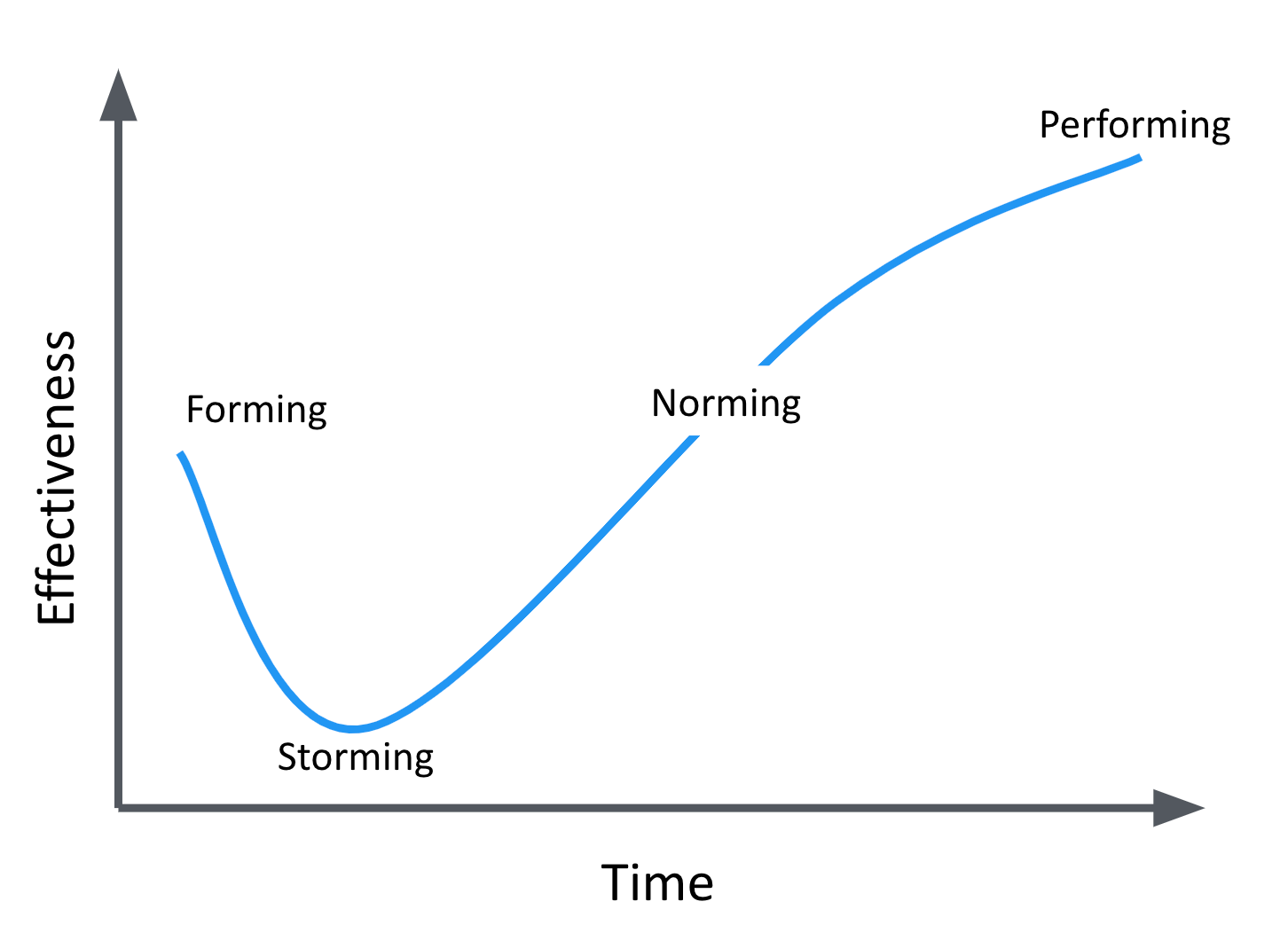
There is no one-size-fits-all way to structure a product team. The structure should align with the strategy and objectives defined to achieve the product vision. Therefore, team structure is not set in stone. If there is a need for change due to shifting goals or strategies, it may make sense to alter the team structure. However, frequent changes are not recommended, given the time required for a newly formed team to go through Tuckman’s stages. Some companies change their product development team structure every 3 or 6 months, but this might not allow the team enough time to progress through Tuckman’s stages.
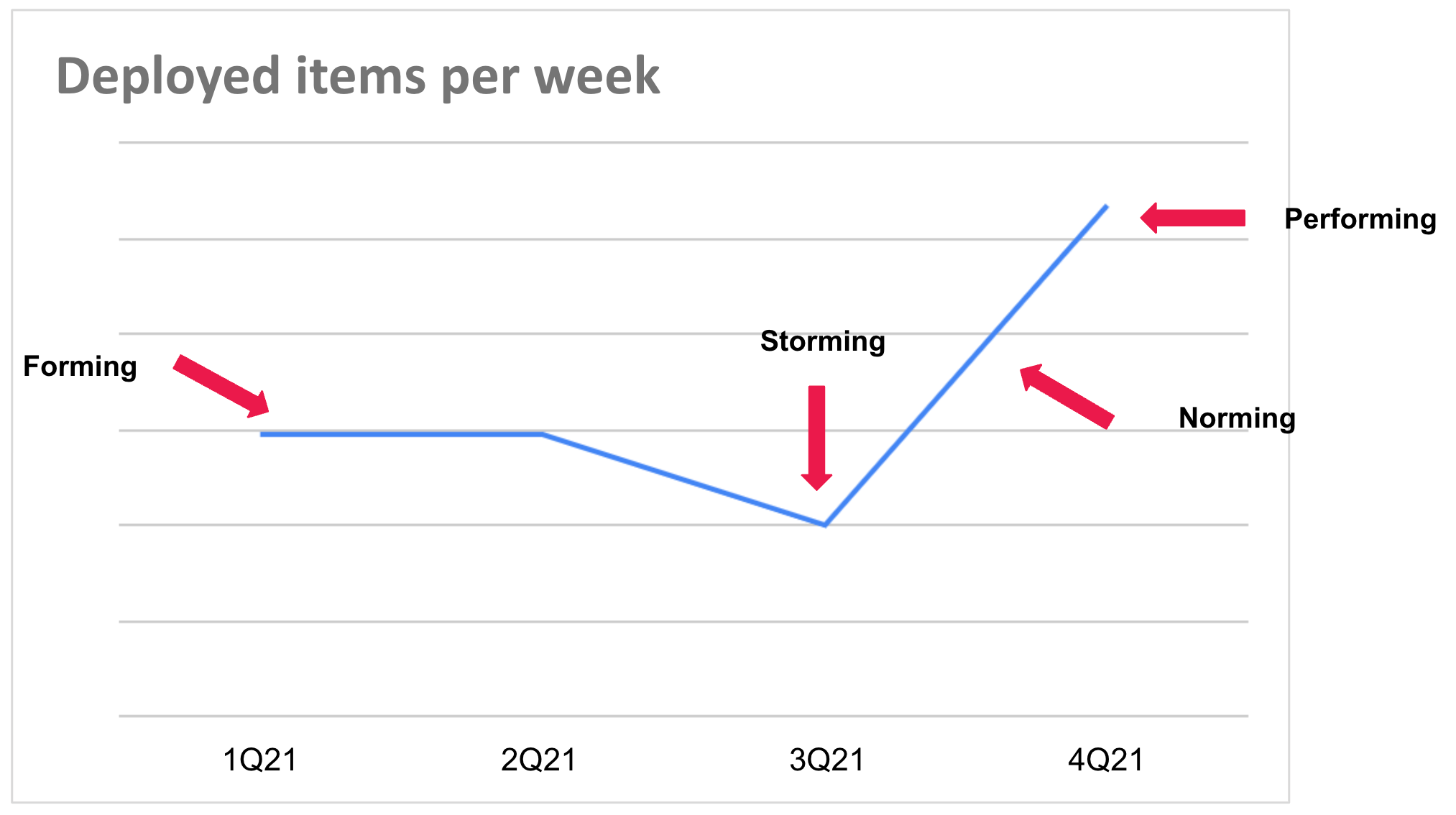
In the following image, I present a real-life example. One of my clients began hiring new people throughout the first quarter and into the second quarter. The team reached the desired size and structure at the end of the second quarter. In this image, it’s clear that the third quarter was a period of adjustments (the storming phase of the Tuckman model), leading to normalization in the fourth quarter and the beginning of performing.
Digital transformation and product culture
This article is another excerpt from my newest book “Digital transformation and product culture: How to put technology at the center of your company’s strategy“, which I will also make available here. So far, I have already published:
Part 1: Concepts
Chapter 1: The so-called digital transformation – Project and Product
Chapter 2: Uncertainty and digital transformation
Chapter 3: Types of company
Chapter 4: Type of company vs digital maturity
Chapter 5: Business models
Chapter 6: Agile, digital and product culture
Part 2: Principles
Chapter 7: Deliver early and often – Measuring and managing the productivity – Case study: Dasa Group – Case study: Itaú Unibanco
Chapter 8: Focus on the problem – The Famous Product Discovery – Why the “business demands => IT implements” model does not work – Case study: Magazine Luiza
Chapter 9: Result delivery – Outsource or internal team? – Case study: Centauro
Chapter 10: Ecosystem mindset
Part 3: Tools
Chapter 11: Product Vision – Product vision examples
Chapter 12: Product Strategy
Chapter 13: Team Structure – Structuring effective product development teams – Structural teams – Team structure spreadsheet – Downsizing and layoffs – CTO + CPO – Internationalization – Outsourced team – Tuckman model
Workshops, coaching, and advisory services
I’ve been helping companies and their leaders (CPOs, heads of product, CTOs, CEOs, tech founders, and heads of digital transformation) bridge the gap between business and technology through workshops, coaching, and advisory services on product management and digital transformation.
Gyaco Podcasts
At Gyaco, we believe in the power of conversations to spark reflection and learning. That’s why we have two podcasts that explore the world of product management from different angles:
Produto em Pauta: In the new season, titled “Beyond the Buzzwords”, Felipe Castro and I demystify product terms with real examples from our clients. Available on YouTube and Spotify. Recorded in Portuguese, with English subtitles on YouTube.
Product Chronicles, the Brazilian Way: with Fábio Martinelli Duarte and Paulo Caroli — the Brazilian way of building products: stories, challenges, and lessons learned, featuring case studies from our clients. Available on YouTube and Spotify. Recorded in English, with Portuguese subtitles on YouTube.
Digital Product Management Books
Do you work with digital products? Do you want to know more about managing a digital product to increase its chances of success, solve its users’ problems, and achieve the company's objectives? Check out my Digital Product Management books, where I share what I learned during my 30+ years of experience in creating and managing digital products:
Digital transformation and product culture: How to put technology at the center of your company’s strategy
Leading Product Development: The art and science of managing product teams
Product Management: How to increase the chances of success of your digital product
Startup Guide: How startups and established companies can create profitable digital products